The hotel embroidery residency playbook.
Most guides about live embroidery at hotels are written for decorators. This one is written for the person who owns the property's calendar — the events director, the DOSM, the GM who has to defend every vendor on the dock schedule. Here is exactly how a three-day residency runs when it runs well.
T-minus two weeks: the paper walk
Nobody should discover a problem on load-in day. Your team sends floor photos and a marked-up plan; ours returns a station sketch showing the footprint, the outlet we intend to use, and the cart path from the service elevator. Insurance certificates and vendor forms go to your admin the same week. The goal is that when day one arrives, everyone with a radio already knows who we are.
Day one: the long morning
The crew hits the dock at the scheduled window — ninety minutes before doors is the standard ask. Cases roll through back corridors, the station builds, and the morning ends with the ritual that anchors the whole run: a test stitch on each garment style, photographed and texted for sign-off. If a robe's stabilizer needs adjusting or a cap crown runs tight, it gets solved before a single guest is watching.
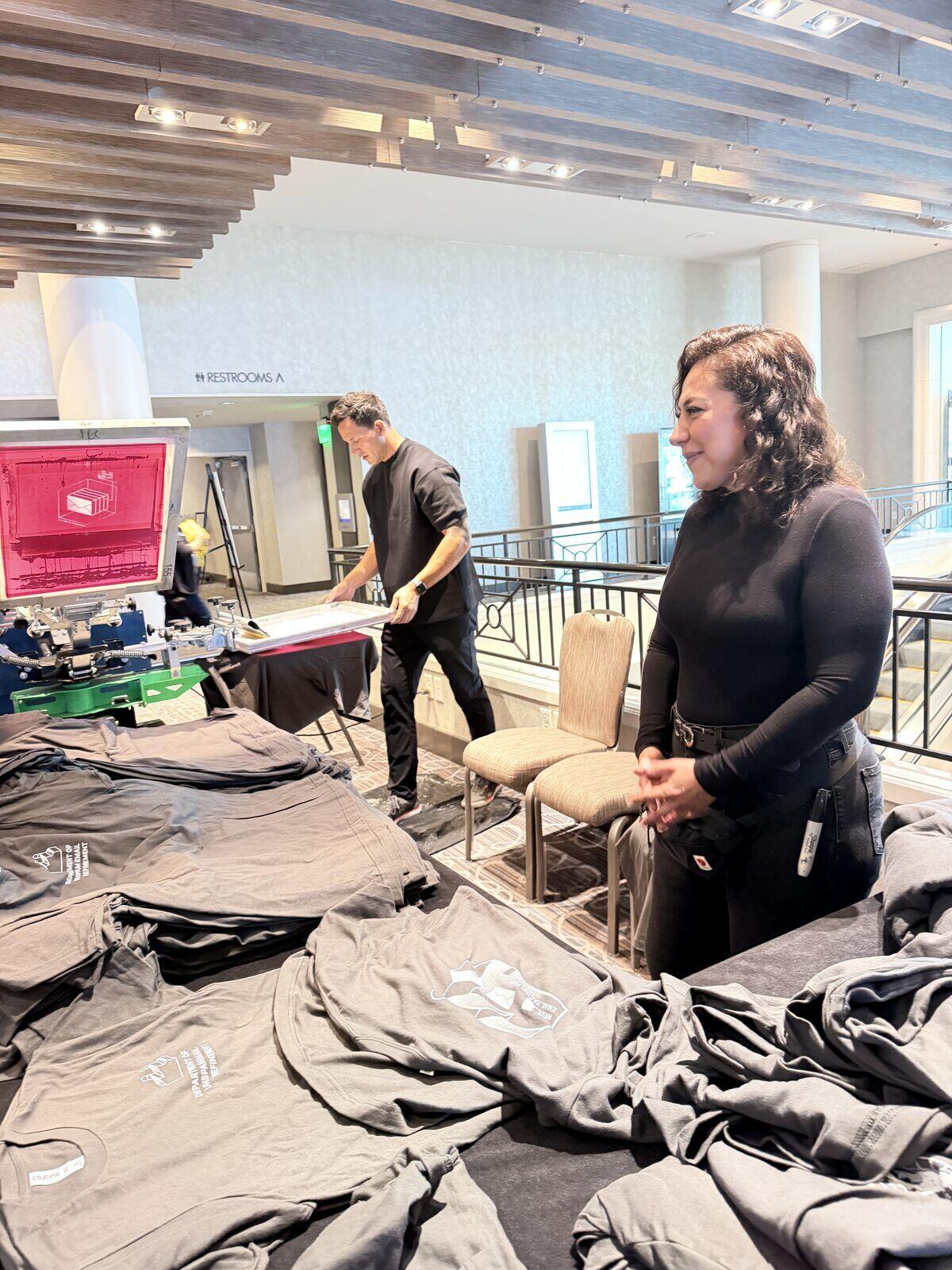
Days two and three: the short mornings
This is where residencies pay off. Equipment stayed cased on property overnight under the hotel's lock, so morning two is a thirty-minute wake-up: uncase, re-thread, test stitch, open. The crew is the same people from yesterday — the ones who already know your banquet captain's name and where housekeeping hides the good carts.
The close-out: counts, not vibes
Every evening ends with a piece count and a size check. After the final strike — about 45 minutes, corner vacuumed — the property gets a recap within the week: total pieces stitched, which garments moved, which sizes ran dry, and what we'd stock deeper next time. That report is what turns a one-off into a seasonal fixture, because it gives whoever approved the spend a document that reads like results.
The dock sheet engineering actually reads
Residencies live or die in the facilities office, so the station brief stays deliberately small: a 10-by-10 footprint (we have built clean in 8-by-8), one 15-amp wall circuit with our own surge protection and cable ramps, two six-foot tables or one dressed eight-footer, sound at conversation level, and a strike that leaves the corner vacuumed. No generators, no tie-ins, no rigging points, nothing that wakes up the chief engineer. Cases roll on non-marking casters and fit any cab that takes a luggage cart. Most properties approve the sheet on the first read because there is nothing on it to negotiate — which is the point. The full spec sits on the space and power page if your team wants it before the call.
Why day three costs less than day one
The economics of a residency are front-loaded on purpose. Day one carries the full load-in, the test stitches, and the crew’s longest hours. Days two and three inherit all of that for free: thirty-minute wake-ups, no re-digitizing, no new paperwork, the same crew running muscle memory. Since crew time bills at $250 an hour from arrival to strike, shorter mornings are not a courtesy — they are a visible line-item drop. Properties comparing one three-day residency against three separate one-day bookings are really comparing one setup against three, and the residency wins that math before the garments are even priced.
Who pays: the three shapes the spend takes
Hotel programs settle into one of three funding shapes. Property-hosted: the hotel buys the activation as an amenity — pool-deck robe stitching, holiday lobby residency — and owns the guest-experience win. Group-billed: a conference or incentive group hosts the station for its attendees and the master account carries it, which is how most of our conference residencies run. Hybrid retail: the property hosts the station and guests pay per piece for premium garments, softening the program cost while keeping the perceived gift intact. Deciding the shape early matters because it changes the paperwork, not the station — and paperwork is the only part of this that ever runs late.
Ask for the same crew back
One clause worth writing into any residency renewal: crew continuity. The operators who ran your winter program already know the banquet captain, the good freight route, and which ballroom outlet trips when the uplights share it. That knowledge never appears on an invoice, but it is why a returning crew’s day-one looks like everyone else’s day-three. We staff repeat properties with returning leads by default; if your vendor treats crews as interchangeable, the playbook above gets relearned annually at your expense.
The hotel program page covers formats and the facilities FAQ; the cost breakdown explains why day three costs less than day one. When your dates firm up, start the paper walk.